


Plant-Based Protein Powders Review: What I Recommend (and Why!)


I think we all could agree that 2025 was the year of protein. Why is everyone freaking out about protein? Protein is good for you in midlife. So, this is my contribution to that conversation: a review of my three current plant-based protein powders.
You might be asking yourself, "Is protein powder good for your health?" Let’s face it, protein powder is a processed food. If you have been around my work for a bit, you know I am always going to prioritize real food first.
However, I live in the real world, and I have real protein goals. Busy mornings, post-workout windows, travel, or simply hitting the point where I cannot eat another bite of chicken…protein powders can be incredibly helpful!
Plant-Based Protein powders are healthy if they...
Have minimal added ingredients.
Ingredients like gums, sugar alcohols, and natural or artificial flavors can have side effects and affect appetite
Are not toxic!
Some protein powders contain high levels of arsenic (rice protein), lead, and cadmium (chocolate flavored).
Are low in sugar.
We look for brands that have minimal added sweetener.
Have a good quantity of protein per calories consumed.
Have a broad spectrum of amino acids.
Women in midlife need leucine and BCAA! The plant-based protein powder with the most leucine is pea protein. We like plant-based protein powders with pea or a mix of pea with other plant-based protein sources.
Protein matters at every age and every stage of life, especially in perimenopause when protein needs increase to support muscle mass, blood sugar stability, satiety and cravings, recovery, and overall resilience. To learn more about the importance of protein and protein powders, check out my past blog on carb cravings in perimenopause.
How I review a Protein Powder
Not all protein powders are created equal. Honestly, many of them are a mess, filled with gums, additives, and long ingredient lists, and they can taste AWFUL!
I rotate protein powders every so often, so here is a review of the latest 3:
And yes, I always choose vanilla as my “control”.
Here’s what I actually care about when picking out a new protein powder:
Protein per serving: Ideal is 20-25g per serving
Ingredient quality: How many ingredients? What is the source(s) of protein? Any sweeteners?
Digestibility: Gums? Fibers? Bloating potential?
Macronutrient profile: Calories, protein, fat, carb ratios
Added nutrients or functional ingredients: Herbs? Other nutrients? Fiber?
Taste & texture: mostly personal!
Cost per serving: Is this cost-effective to have regularly?
Best use case: I found this best in what meals?
Ka’Chava Protein Powder Review: the “all-in-one”

This is not just a protein powder - it's a full nutrition blend. Protein + carbs + fats + adaptogens + greens + probiotics + superfoods! It’s a lot…and for some people, it may be too much.
What I like:
Very nutrient-dense
Delicious taste!
Can function as a full meal
What to consider:
Expensive per serving!
Long ingredient list, not ideal for sensitive clients
Higher calorie load
Best for:
Meal replacement
Undereating/skipping meals
Convenience with nutrition
How I use it:
This was my winter favorite. I loved it in my morning oatmeal/muesli with frozen berries, chia, and hemp seeds. My digestion was incredibly consistent while using.
The downside? It’s calorically dense, and I often found myself adding it on top of meals, which pushed my calories beyond my needs.
Om Mushroom Superfood Powder Review: just enough

This one brings in a functional angle, combining plant protein with mushroom blends (lion’s mane, cordyceps, and reishi).
What I like:
Unique focus on stress + brain health + immune support
Added BCAAs for muscle recovery and repair
Good option for people exploring functional ingredients, but don’t want to deal with adding them individually
What to consider:
Earthy flavor
Slightly gritty texture
Moderate protein content
Best for:
Stress support
Cognitive focus
Clients who are curious about functional nutrition
How I use it:
Great in smoothies or even mixed into coffee for a more functional start to the day.
Truvani Protein Powder Review: clean & simple
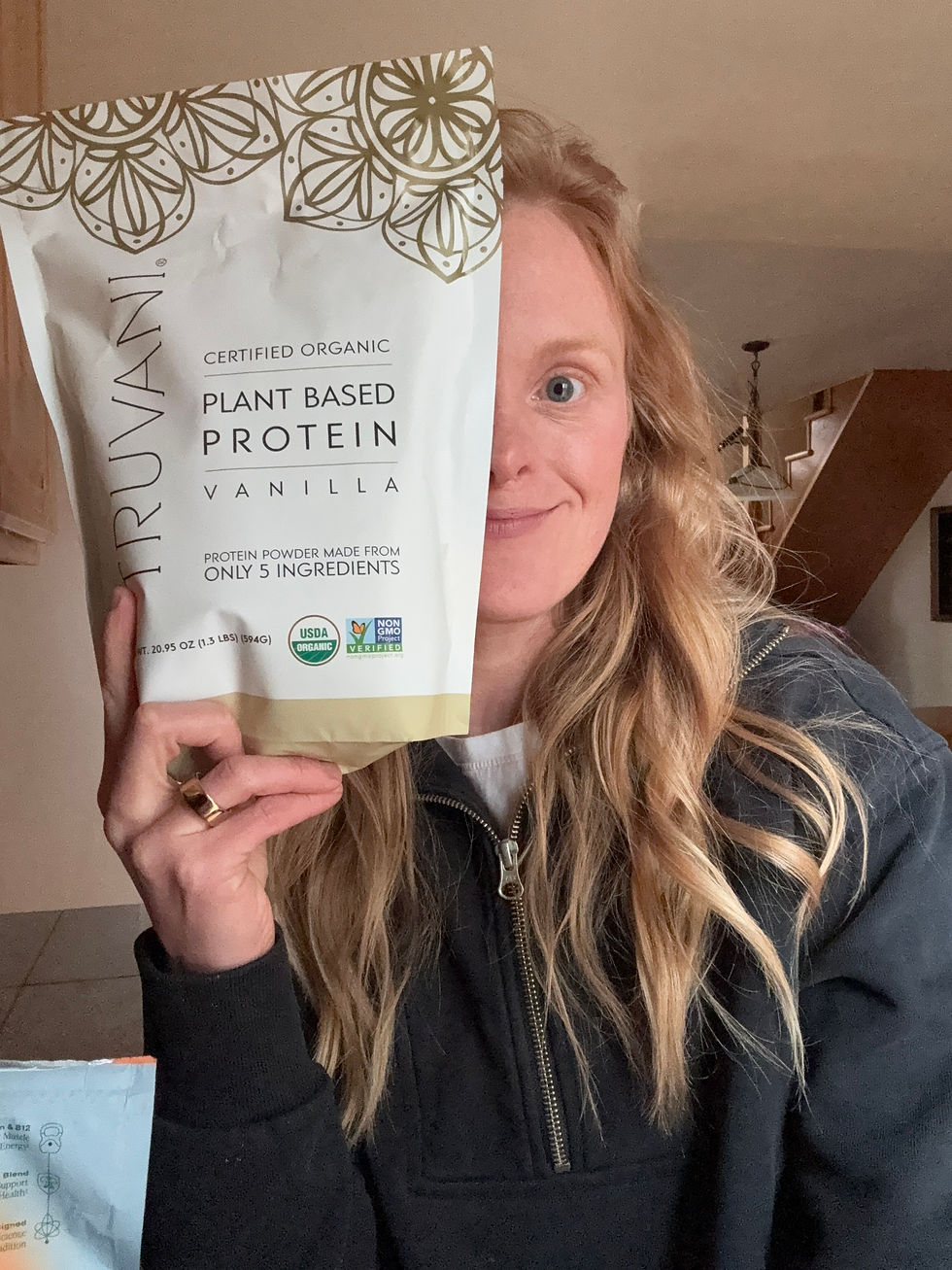
This is my go-to when I want minimal ingredients. A short, recognizable ingredient list of just 5 ingredients!
What I like:
Simple, clean, recognizable ingredients
Easy on digestion, for most clients and me
No fillers or unnecessary extras
What to consider:
Slightly lower in protein (20g/serving) than other brands
Monk fruit sweetener after taste for some
Slightly gritty texture
Vanilla flavor is mild and not overly sweet
Best for:
Sensitive digestion
Limited ingredient needs
Anyone overwhelmed by long ingredient labels
How I use it:
I find this protein powder to be best in baked goods, like my protein powder muffins. It was my least favorite for daily use in oatmeal and/or smoothies because of the grittiness and the lack of vanilla flavor I was looking for.
So, which one is the best?
There isn’t one, and your favorite may be different from mine. For me, my winter favorite was Ka’Chava, and my current spring favorite is Om Mushroom Superfood, followed by Truvani.
If you are choosing a protein powder, here is my general filter:
At least 20g of protein/serving, preferably higher!
Minimal fillers and no artificial sweeteners
Ingredients I can recognize, and if I don’t need extras, go for simplicity!
Does it agree with my digestion?
If you want
Clean and simple → Truvani
A full meal → Ka’Chava
Functional/stress support → Om Mushroom Superfood
Nutrition is always personalized! And protein powders are a tool, not a requirement. Check out my chart below, combing through each requirement to help you choose the next protein powder to try!
Protein Powder Comparison Chart: How to choose a protein powder that is good for you
Ka’Chava | Om Mushroom Superfood | Truvani | |
Protein per serving | ~ 25g | ~20g | ~20g |
Type of protein powder | Plant protein blend (pea, brown rice, chia) | Plant protein blend (pea + rice) with mushrooms | Simple plant protein (pea-based) |
Ingredient quality | Very long list (protein, greens, adaptogens, probiotics, fiber, micronutrients) | Moderate list (plant-protein + mushrooms) | Very short list of ingredients |
Digestibility | Could bloat sensitive individuals | Generally moderate tolerance | Easy to digest |
Macro profile | High calorie, higher carb and fat, used as meal replacement | Low calorie, low carb, low fat | Low calorie, low carb, low fat |
Added nutrients | Extensive list of greens, adaptogens, fiber, and probiotics | Functional mushrooms | Minimal (no extras) |
Taste & Texture | Smooth, best tasting | Earthy, slightly gritty | Mild, slightly gritty |
Cost per serving | $$$ (highest cost/serving) | $$ (moderate cost/serving) | $$ (moderate cost/serving) |
Best use case | Full meal replacement, smoothies, oatmeal, muesli | Smoothies, baked goods, coffee add-in | Simple protein add-in, baked goods |
Have you found a plant-based protein powder you love? Drop it in the comments - I'm always looking for a new brand to explore!
Follow Us on Instagram!
Want a little help putting this into action? Join our Instagram community. This post is just the start! Explore more tools that make wellness simple, practical, and fun.


Comments